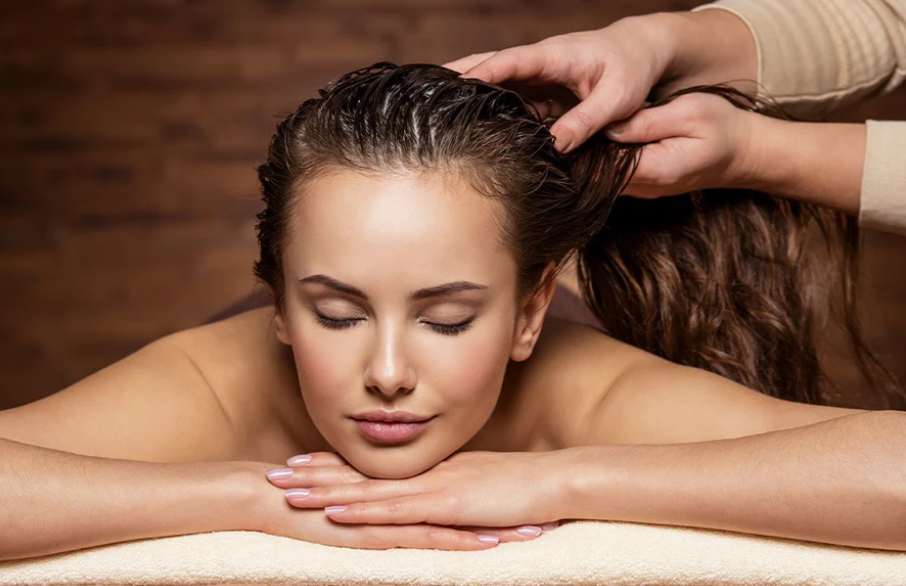
Dandruff can be a major confidence breaker. No matter how much you try to hide or resist the small white flakes, they will return. This is the time to change your hair care routine if you have been struggling with this difficult issue.
The extraordinary benefits of the oil, which comes from Melaleuca alternifolia, or tea tree, have been well-known for a long time. It’s also known for its ability to treat fungal and bacterial diseases. Let’s take a look at its benefits and features to find out how it can help you eliminate dandruff.
Here are some benefits of using tea tree oil to treat dandruff
1. Fights Dandruff-Causing Fungus
Malassezia, a fungus with yeast-like characteristics, is one example. It can be found on the scalp in small amounts. Malassezia can become overgrown in some people. This could be due to poor hygiene, such as not washing your hair often, or a medical condition. In any case, dandruff can occur. A study found that shampoo containing 5% tea oil reduced dandruff due to yeast Pityrosporum Ovale (Malassezia). For a month, participants used either tea tree oil shampoo or a placebo. The severity of dandruff was 41% lower for those who used tea tree oil shampoos.
2. Soothes itchy, irritated scalp
Tea tree oil may help to reduce dandruff symptoms such as itching, oiliness and blisters. SLS Free Recent research has shown that shampoo with tea tree oil significantly reduced microbial growth by 78%.
3. Nourishes Hair
Tea tree oil strengthens the roots, allowing hair to grow to its full potential. It reduces dandruff and keeps your scalp clean.
How can you use tea tree oil to make dandruff?
Tea tree oil is one the most effective essential oils to treat dandruff. Here’s a quick summary of the many uses of tea tree oil for removing dandruff:
- Shampoo with 5% tea tree oil
- You can add 5-10 drops tea tree oil to your shampoo if it does not contain it. Well shake the bottle. Use circular strokes to massage the mixture into your scalp before you rinse with cold water.
- Tea tree oil can be used to make your dandruff shampoo. This recipe calls for 1/2 teaspoon of virgin cold-pressed coconut oil/olive oils, 1/3 cup baking soda, 1/4 cups filtered water and 20 drops tea tree oil. Combine all ingredients in a glass container and shake vigorously. Use a teaspoonful of the mixture to wash your hair.
- The shampoo can be stored in the refrigerator up to one month. Before using the shampoo, give it a good shake. To successfully treat dandruff, the tea tree oil shampoo should be used for at least 4 weeks.
Does tea tree oil have the ability to cure dandruff
Yes. Itchy scalp is not a serious condition. Tea tree oil can be helpful in reducing dandruff. This is especially true if the dandruff is caused by Malassezia, a yeast-like mold. You should not use the entire amount of tea tree essential oil. Instead, you should test a small area before applying it to your skin.
Tea tree oil is good for dandruff.
Yes. Yes. It may also help prevent hair loss due to dandruff.
Tea tree oil vs. onion oils for dandruff
The scalp is nourished well with Onion oil. It also combats hair problems like greying, hair loss, and dandruff. Tea Tree oil promotes hair growth and helps to prevent dandruff.
Take Away
Tea tree oil can help keep Malassezia away from your scalp. You should consult a doctor before using it on your scalp.
Commonly Asked Questions:
1. Is tea tree oil able to get rid of dandruff
Tea tree oil can be helpful in reducing dandruff. This is especially true if the problem is caused by Malassezia, a yeast-like fungal.
2. How can you dilute tea tree oil to make dandruff?
Do not apply undiluted tea tree oil to your scalp without diluting it first. Instead, mix it with carrier oils like coconut oil. You can dilute the oil mixture with aloe vera or apple juice vinegar as it may be difficult for your hair to remove.
3. Is tea tree oil good for my hair?
Tea tree oil is safe for all hair types, textures and types. It has very little or no effect on hair. Although tea tree oil can be used to treat scalp conditions such as dandruff and other hair problems, it is possible for it to cause irritation.
References:
- C. F. Carson1 K. A. Hammer1 and T. V. Riley. Jan 2006. Melaleuca alternifolia Oil: A Review of Antimicrobial Medicinal Properties
- Andrew C Satchell and Anne Saurajen, Craig Bell and Ross StC Barnetson. Dec 2002. Treatment for dandruff using 5% tea tree oil shampoo